2011-01-08

2011-01-09 Ritual for the opening of the Taisui hall in Huang Daxian temple in HK-黄大仙 太岁殿开光

2011-01-09 黄大仙 太岁殿开光
La nouvelle salle permettant de célébrer et de prier l’étoile contrôlant le destin de chacun ainsi que la renovation du hall principal du temple Huang Daxian ont été inaugurée le 09-01-2011 avec la participation des représentants taoïstes de Hongkong, Chine continentale et Singapour. La cérémonie « Kaiguang 开光 » ou « d’ouverture des Yeux » fut présidée par l’abbé du temple, vêtu de pourpre et déambulant sur des constellations imaginaires afin de transmettre le message aux divinités du panthéon taoïste qu’ une nouvelle sacrée venait d être érigée. Le rituel organise par des dizaines de prêtres inclut des offrandes et la présentation de la requête aux divinités au son des instruments de musique traditionnelles taoïstes et sous les volutes d’encens.


2011-01-09 Huang daxian-taisui hall opening-黄大仙 太岁殿开光352011-01-09 Huang daxian-taisui hall opening-黄大仙 太岁殿开光34


Links:
Wikipedia (eng) : Huang Daxian temple
website du temple Huang Daxian (eng)
auteur : Karine

嗇色園黃大仙祠大獻供九十周年紀慶暨大殿及太歲元辰殿揭幕慶典
source : Huang daxian temple website press release
日期: 09.01.2011
踏入嗇色園90周年紀慶的大日子,本園舉行大型慶祝儀式,與全港市民分享喜悅。
慶典的重頭戲為相隔5年,再一次呈現大家眼前的祭天儀式「大獻供」,本園於2006年85周年時舉辦後,便不曾再辦。「大獻供」是參照道教全真派混元宗壇的科儀,是道教其中一項最高的祈福祭天儀式。本園主席兼監院李耀輝先生帶領近百名道長,在8呎高的四大護法伴隨下,進入祭壇舉行科儀。多名擁有重要社會地位的人士擔任獻供嘉賓,包括全國人大代表、行政會議成員、立法會議員、區議會主席等代表香港市民向上天獻上「十供」,包括香、花、燈、水、果、茶、食、寶、珠、衣,祈求上天賜福香港,祝願市民事事順景。
本園很榮幸邀請到香港特別行政區民政事務局局長曾德成太平紳士、中央駐港聯絡辦公室協調部部長沈沖先生及中國道教協會會長任法融道長,為本園九十周年紀慶暨大殿及太歲元辰殿揭幕慶典擔任主禮嘉賓,見證嗇色園踏入歷史性一刻,為園務發展揭開新一頁。而籌備及建設近三年的太歲元辰殿將於1月12日早上8時正開始正式對外開放。
為讓慶典順利舉行,黃大仙祠於1月9日會全日封閉,本園早前已舉行儀式,移奉黃大仙師寶像至黃大仙祠外的廟宇廣場,供善信繼續禮拜祈福;較早前本園已透過電腦抽籤抽出60名市民,入祠列席觀看「大獻供」科儀,而祠外的廟宇廣場亦設立200至300個座位,透過大型屏幕直播儀式進行,讓更多市民共沾福澤。
為與各界分享喜悅,本園特意邀請二百多名中外友好人士來港,參與是次大型慶典。晚上假座亞洲博覽館筵開過百席,舉行「90周年紀慶慶祝活動啟動晚宴」,為一連串慶祝活動正式揭開序幕。
踏入90周年,嗇色園發展將會繼續向前。嗇色園植根香港90年,一直本著「普濟勸善」精神為社會服務。本園轄下的服務單位,全年將會舉行多項別出心裁的慶祝活動,與市民共享喜悅。
社會服務方面,將會挑選20位具代表性的年長人士出版《90歲以上的生命故事集》,分享他們90年來的心路歷程;又會與理工大學的綾緻中心合辦「90後、2101時裝繽紛秀」,設計適合長者的服飾。醫療服務方面,舉辦「長者四時養生計劃」,中醫師以四時養生的概念為院舍及社區長者提供輔導及中醫問診服務,並定期為參與長者評估身體狀況,以比較計劃前後之身體狀況差別;又會印製「長者四時養生手冊」,於紀慶期間免費派發予市民;以及舉辦一系列全人健康教育講座及運動身體檢查等活動;教育服務則會舉辦「畫出大仙祠新貌」的大型活動,透過不同類型的比賽,讓學生為公眾介紹黃大仙祠全新的面貌;及破天荒於晚上開放大殿平台舉行「星空下的黃大仙祠」,讓公眾人士利用本園提供的天文望遠鏡進行天文觀測。所有活動詳情請留意本園日後公布。
嗇色園為一所宗教慈善團體,創於1921年,崇奉道、釋、儒三教,並以「普濟勸善」為宗旨,辦理醫療、教育及安老扶幼等事務。本園管轄的黃大仙祠,終年香火鼎盛,慕道而來的善信及中外遊客絡繹不絕,每日平均訪園人數逾一萬人次。


source : Huang daxian temple website press release
LiveJournal Tags: ,,,, 黄大仙 太岁殿开光

2010-04-05

DVD Documentary on Taoism

Lavoie du tao 2

la voie du tao 2

The DVD can be bought on http://www.arteboutique.com/detailProduct.action?product.id=453673

Extrait du DVD : http://www.artevod.fr/bandeAnnoncePlayer.html;jsessionid=B4E09008F637C3F53A4FAB37C4AF139E.tc6v2?ficheId=5290

Ci-dessous, le descriptif:

La Voie du Tao ou l'art de l'immortalité

Réalisateur : Yves de Peretti
Producteurs : IDEALE AUDIENCE, ARTE FRANCE

La beauté mystérieuse de l'art chinois, la magie des paysages et des temples, la poésie des aphorismes et la faveur des fidèles nous font sentir la force d'inspiration inégalée que représente le taoïsme pour les chinois depuis 3000 ans

Le film s‘aventure pour la première fois à la rencontre du taoïsme, religion sans dogme, en pleine renaissance en Chine depuis une vingtaine d’années.

En prenant pour guide une jeune française qui a tout quitté pour vivre l’éthique taoïste et est venue en Chine s’initier auprès des Maîtres, le film nous plonge au coeur de ces pratiques et rituels ancestraux qui ont su s’adapter à la modernité.

A Pékin, nous découvrons le Temple du Nuage blanc, centre officiel du taoïsme en Chine. C’est une ruche où se croisent toutes les facettes du taoïsme : étude des textes anciens, pratique de la calligraphie et de la peinture, apprentissage de la méditation et des techniques du souffle, médecine chinoise, etc.

Puis nous partons dans le centre de la Chine, dans la montagne où le légendaire Lao Tseu, figure divinisée du Vieux Sage, aurait dicté le Tao Te king, le "Livre de la Voie et de la Vertu". Le film nous transporte de temple en temple, de montagne sacrée en montagne sacrée, à la rencontre de Maîtres et d’ermites qui aspirent au Tao, ou "quête de l’immortalité" et nous font sentir de l’intérieur les principales dimensions du taoïsme. En contrepoint, la piété des adeptes dans les lieux de dévotion, la richesse exubérante de la pyramide des divinités, reflet d’un monde fortement hiérarchisé, nous questionnent sur cette religion qui s’ancre au coeur de la société chinoise.

A travers les oeuvres d’art (en particulier les peintures de paysages) qui scandent le film, nous pénétrons dans l’intériorité de la relation harmonieuse de l’homme avec la nature, qui est au coeur du taoïsme

ARTE F © Idéale Audience

ARTE F
Réalisateur: Yves De Peretti
Producteur: Ideale Audience

 Alors que s'ouvre au Grand Palais l'exposition sur le taoïsme, ARTE part à la découverte de cette religion initiée par Lao Tseu, en pleine renaissance dans la Chine d'aujourd'hui.

L e film nous mène dans les lieux mêmes où le taoïsme a pris naissance et auprès de ses adeptes, dans les centres de dévotion. Tout au long de ce voyage, la beauté mystérieuse de l'art chinois, la magie des paysages et des temples, la poésie des aphorismes et la ferveur des fidèles nous font sentir la force d'inspiration inégalée que représente le taoïsme pour les Chinois depuis 3 000 ans. En prenant pour guide une jeune Française venue en Chine s'initier auprès d'un maître, le réalisateur nous plonge au coeur de ces pratiques et rituels ancestraux qui ont su s'adapter à la modernité.

La voie et la vertu
À Pékin, nous découvrons le temple des Nuages Blancs, centre officiel du taoïsme en Chine. C'est une ruche où se croisent toutes les facettes du taoïsme : étude des textes anciens, pratique de la calligraphie et de la peinture, apprentissage de la méditation et des techniques du souffle, médecine chinoise... Puis nous partons dans le centre de la Chine, dans la montagne où le légendaire Lao Tseu, figure divinisée du vieux sage, aurait dicté le Tao Te King, le "Livre de la voie et de la vertu". De temple en temple, de montagne sacrée en montagne sacrée, le film nous mène à la rencontre de maîtres et d'ermites qui aspirent au tao et nous fait sentir de l'intérieur les principales dimensions de cette religion sans dogme. Vision du monde, culture, état d'esprit autant que religion, le taoïsme questionne le rapport de l'homme à l'univers et vise à retrouver "l'unité primordiale d'avant toute distinction, à laquelle il faut revenir pour renaître". C'est ce mouvement de l'homme vers les puissances cosmiques, si contraire à la vision occidentale, qui nous est ici rendu accessible.

LiveJournal Tags: ,,,,


Pictures taken during filming


2009-11-22 Visit of the Sacred Mountain of the West :Huashan and the Yuquan Temple  陝西華山玉泉院
 

2009-11-22Visit to Ren Fajiu Master in Louguan Tai Temple (Shaanxi) 陝西樓觀台


2009-11-18 The Grand Ritual for the sacred Relics of the Quanzhen Patriarch WangChongyang in Chongyang Gong Temple  陝西重陽宮零股法事


2009-11-18 The Hermit Master Hou in Zhongnan Shan mountains  終南山隱居厚道張


2009-11-15 The Abbess Fengzheng Wu Chengzhen in The Changchun Temple of Wuhan武漢長春官奴方丈法事

Hubei-Wuhan Changchun Guan Temple-Female abbot ritual-武漢長春官奴方丈法事-2009-11-15-

2009-11-13 The White Cloud Temple in Beijing  北京白雲觀:

Beijing Baiyun Guan Temple 北京白雲觀-2009-11-13

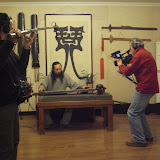
2009-11-23 A Guqin Master in Beijing
Beijing-Guqing master-2009-11-23
Technorati Tags: ,,,

2010-03-22

Weibaoshan: Accomodation and Guides


  • Presentation of Weibaoshan

Please refer to www.weibaoshan.blogspot.com

  • Travel agency and translators:

-Chine-evasion : all travel arrangements from your own country to and within China; Guide and translator (chinese-english-french): Marc Fu : marc@chine-evasion.com
- Local travel agent in Kunming: Yunnan Overseas Travel Corporation; 96 East Dong Feng Road, Kunming, China. Tel (china) (0871) 3180353 3126832 ; Fax: 3132508 3132512 ;Guide and translator (Chinese-french-english) Mr Lu Xin Xing (Philippe): Philippe_1900@hotmail.com
-Local guide in Weishan : Speaks Chinese, english, french,Yunwp@yahoo.com ; adress : Huancheng Dong Lu Road ; Weishan, Dali, Yunnan 672400 China ; phone in China: +86 (0)872 61 24 698 ; Phone in Switwerland: +41 79 829 43 84


  • Weibaoshan hotel 巍寳山兵官
This is the only Hotel on the mountain and it is quiet, simple but clean and comfortable with 50 rooms, each with two single beds, Hot water-shower, TV...etc. Price : max 120 yuan/room.
click here for how to get to weibaoshan.
more information on Weibaoshan on google Weibaoshan


  • Rooms in Wenchang temple

Wenchang temple is an active religious taoist temple with taoist chanting morning and evening ; however, it offers simple rooms without showers or WC for 20 RMB'/day for pilgrims.
The temple is in Weibaoshan mountain, 5 mins walk from Qingxiaguan Temple.
Bed-Rooms in Wenchang Temple
Accomodation in Wenchang Temple
Wenchang Temple"


  • Accomodation in Weishan village

Weishan 蘶山鎮 is the closest village to weibaoshan (10 km); it is an ancient “walled village”, birthplace of the Nanzhao kingdom with many hotels available.
Try to contact any of the agencies above.
More information about weishan: on Chinaculture.org ; usachina-arts ; and on google Weishan search

Weishan Village

------------------------------------------------------------------------------------------
-----------------------------------------------------------------------------------------

2010-03-17

Testing Times for Taoists

Interview of a Taoist Nun in her Temple  in Beijing
Source : News Xinhuanet
By Zhang Lei
BEIJING, March 17 -- The Taoist hermits rode the clouds, teleported through space and were once worshipped across the nation for their extreme pursuit of ultimate freedom. Yet the attractive philosophy of the ancients can sometimes seem somewhat out of step with modern cravings for conspicuous consumption. Even those who choose to separate themselves from the manmade material world soon find they must face challenges from the corrosive aftershocks of reform and opening-up.
At first glance, the solitary Taoist nunnery of eastern Beijing looks deserted sat amidst the chilly gray smog of early spring. Youminguan's regular 10 or more priests prospered here, benefiting considerably in the 16th century from the old Grand Canal connecting Beijing to Hangzhou.
The Cultural Revolution (1966- 76) soon ended that. For subsequent decades, all that remained was an ancient tree where villagers occasionally prayed. "It's efficacious," says nun Liu Chongyao, in her 50s, who took over this, the second-largest Taoist temple of the capital city in 2007 after its rebuilding in 2004.
In her Taoist hat and dark blue robes, this founder of a new nunnery looks younger than her years. "I always wanted to have a temple for Taoist nuns. Twenty years later, my dream came true," says Liu, sitting in an office with governmental regulations hanging on every wall. Fruits and candies are offered to guests at the tea table. "They are all donated by followers, including the rice and flour we eat," says the nun of nearly 30 years.
Since the Beijing Religious Affairs Bureau permitted her nunnery in August last year, Liu has had regular reasons to ponder the trade-off between seclusion and survival. She must grapple with an inconvenient truth that her religion needs money to drive forward. "If there were no worshippers, there would be no income from the incense," she says. "And then no nuns would come."
She has two disciples in the 1.6- acre temple. In the old days, free food and housing was all anyone needed, she says, but nowadays some would-be nuns will inquire about the monthly salary first. "Nearly all the priests and nuns have mobile phones and are saving for a computer," she says. "Some think bad luck will magically end once they are nuns. Instead, they encounter only yet more bad karma," she says. "You can't stop fate." Liu often tries to talk teenage girls out of a nun's life. She fears they will fall astray as temple life comes under assault from the temptations of rampant secular materialism.
Nationwide about 300 women a year used to become Taoist nuns back in the 1980s: mostly exiled from failed marriages, failed careers or from simply not thinking things through, she says. "Some come to regret it," she says. "It looks bad if they decide to return to secular life and so instead they focus on how they can make money and support their family. "'There are many priests at the doors of hell,' "she quotes the old saying. They should stick to their oaths, she says, even as their quality of living conditions improve. "Some people say religion should keep pace with the times like Shaolin Temple Abbot Yongxin, who revitalized the economy and Buddhism," Liu says. "But I'd rather go back and return to original simplicity."
'Wicked priests'
Yuan Ningjie, 22, a believer from the Zhengyi school, has traveled all over China visiting renowned masters in Jiangsu, Jiangxi and Hunan provinces of southern China. "I met wicked priests and cheats and doubted the Taoism legacy," he says. Just as not all Chinese officials do a good job, so some Taoist priests can fall into womanizing or corruption. "These con artists pepper the history of Taoism," he says.
There are two major schools: Quanzhen in North China and Zhengyi in South China. Compared with Quanzhen school where Liu belongs, Zhengyi school will perform the rituals and therefore form a closer connection with society. "My teacher in South China calls it 'doing business'," says Tao Guanjing, 27, a lay Taoist of the Zhengyi school from Beijing. Secularization is hardly anything new: It can be traced back to the middle of the Qing Dynasty (1644-1911) when priests of the Zhengyi school married and had children, Tao says. "The Zhengyi school ceased being a spiritual pursuit but instead became an occupation," he says. "They would go to the temple at office hours wearing robes but take them off when they were off-duty."
Government policy
Two years after taking over the nearly 700-year-old temple, Liu is attending conferences held by the Tongzhou district government and other organizations before the Chinese lunar New Year. "Actually nuns have no obligation to do these things," she says. "But I have no choice as religious communities are ordered to be 'in complete agreement' with the government." The government in late 2007 launched a scheme to build up groups of religious workers who are politically reliable, knowledgeable and morally convincing. "We should help and guide them to strengthen their self-supporting capabilities, improve self-management in accordance with the law, reflect the wishes of believers, and earnestly safeguard the legitimate rights and interests of religious community," said President Hu Jintao.
Temples are encouraged to finance themselves by selling incense, running stores or restaurants. The faithful are forbidden to conduct "superstitious activities disrupting social order or endangering people's physical and mental health”.
Most temples can get by on donations, says a director of the Beijing Taoist Association who requested anonymity. "Priests usually earn 500 to 1,000 yuan a month," he says.
Since 2008, Taoist priests have been qualifying for certificates from the local Taoist association, according to a document from the Chinese Taoist Association. The certificate provides proof of a priest's identity and recognition of their beliefs, the director says. Liu doesn't seem much interested in them. "I've been a nun almost 30 years with no certificate," she says. Religions wax and wane, she says. The Cultural Revolution, for example, forcibly returned thousands of priests and nuns to lay life. It is precisely under these testing circumstances that a Taoist should hold to their faith, she asserts
New breed
On the ninth day of the Chinese New Year, 30 Taoist priests gather at a Taoist temple in downtown Beijing to celebrate the birthday of the Jade Emperor. Standing or kneeling on the ground of Lüzugong Temple in gaudy red and yellow vestments, they chant and strike gongs from morning to night. Youthful yet poised, Chang Gaolu is among them, a 26-year-old successor to a 1,800-year-old religion. He entered Taoism at 19, after an illness was cured by a Taoist priest's prescription in his hometown in Shandong Province. It just hit him, Chang explains. He was coming down a Taoist mountain from a holy place one day when he burst into tears asking himself, "Why didn't I become a Taoist earlier?" At 22, the Taoist became manager of a Taoist temple in  northeast Pinggu district of suburban Beijing. "Taoist teaching is rich and occult, transcending the material world," he says. "It embodies traditional Chinese thinking, the Book of Changes, martial arts, alchemy and feng shui. "Each field requires years of study." Usually he meditates, chants or studies the classics at temple. Although secluded, the Taoists study modern knowledge, he says. "I log onto the Internet to check the news, such as the Winter Olympics. It's important we keep up with the times."
Alleged decline
Since 2003, the Chinese Taoist College has been open to priests and nuns to earn an associate or master's degree in temple management. There are more than 5,000 Taoist temples and 50,000 Taoist priests and nuns on the Chinese mainland by 2007, according to the Chinese Taoist Association. Religious policy and management is good in China, Liu says. The problem to her mind is a lack of proper practitioners. "Taoist temples abound, but Taoist priests or nuns aren't so easy to find, unlike the Buddhist nunnery on Wutai Mountain that attracted more than 300 nuns to live at temple and follow monastic rules. In comparison with its imported rival, Taoism's image is tarnished, she says. She sees these failings, for example, demonstrated by a lack of dress code. "They don't even wear robes or grow their hair, but the Buddhists are good at building up their im-age," she says. "They wear the garb and shave their hair whenever they are in public."
Taoism is declining, believes the well-traveled Yuan. "No one has been able to arrest its decline since its peak in the middle of the Ming Dynasty (1368- 1644),"he says. Perhaps it is their individuality that makes Taoists so slow to unite. Sects refuse to obey each other, he says. A revival would depend on an overhaul of the education system, Yuan believes.
"Since the modern Taoist college teaches prevailing political theory rather than Taoism, it can hardly be compared with a Buddhist college or seminary. "If only Taoism could attract a better class of believers – true intellectuals – that might conjure some hope."
Fast facts: Mystical rituals of Taoism
Talisman (符箓 fulu)
Paper strips with scribbled mystic words or symbols are empowered to bring luck or drive demons away. It's a kind of spell achieved through qi transmission to protect the body, guard the home, ward off bad luck, summon a deity or cure a disease.
Exorcism (驱邪 quxie)
Some go mad from a yin-yang disorder, harassed by pathogenic factors. A practitioner burns paper or incense, uses a talisman, instruments or incantations to drive away evil.
Fortune telling (占卜 zhanbu)
The original Taoists claimed supernatural oracle powers. For a priest, it's also a handy way to make a living.
Meditation (内丹 neidan)
Internal alchemy uses mental movements and meditation to promote circulation of qi within the human body. A body can support itself if trained to a certain level. If the inner universe is properly linked to the outer world, then food becomes more or less unnecessary. Practitioners in fact eat little, only herbs and fruit in some cases. They also claim to absorb the essence of the sun and the moon.
Elixir (外丹 waidan)
As an approach to immortal life, an elixir is often made from lead and mercury in Taoist alchemy. It won't work for everyone, but is more like a catalyst for advanced practitioners.
Taoist medicine (道医 daoyi)
As Taoist meditation is based on the five elements – metal, wood, water, fire and earth –and theory of meridians and collaterals, many Taoists are proficient in Chinese medicine. Some Taoists have secret recipes handed down for generations.
(Source: Global Times)
LiveJournal Tags: ,,,,

2009-11-22

Visit to Master Ren Fajiu in Louguantai 陝西樓觀台 (2009-11-22)

With the Arte film screw, we went interviewing, the Ritual Master Ren fajiu who lives in Louguantai Temple (Shaanxi province); the place where Laozi wrote the Dao De Jing.
History on Louguantai on : daoinfo.org

  • Pictures of the day:


---------------------------------------------------------------------------------
  • Links:

-Information on Louguantai Temple :
http://en.daoinfo.org/wiki/Lookout_Tower_Platform_(Louguantai),_Shanxi
-Information on the Da0 De Jing: http://en.daoinfo.org/wiki/The_Book_of_Dao_and_its_Virtue_(Laozi)
--My Photos on DW and PW
-Youtube Video presenting Louguantai (in Chinese) :

---------------------------------------------------------------------------------
Technorati Tags: ,,,,,,,,
---------------------------------------------------------------------------------

Visit of Huashan with ARTE film crew (2009-11-22)


Photos from DW and PW

2009-11-18

The Linggu Ritual in Chongyang Gong Temple (2009-11-18)

道教全真派創始人王重陽靈柩安奉大典舉行
Ritual for the burial of the sacred relics of the Quanzhen patriarch Wang Chongyang in his home town : Shaanxi, Huxian, Chongyang Gong Temple. Ritual held the 18 th November 2009.


  • Links in English:
    -Presentation of Chongyang Gong Templedaoinfo, Chinatravel
    -Presentation of the Quanzhen Patriarch Wang Chongyang : wikipedia ,

    道教全真派創始人王重陽靈柩安奉大典舉行 齊曉飛出席

    2009年11月19日 陜西日報
    佛教線上西安訊 2009年11月18日,道教全真派創始人——王重陽靈柩安奉大典在陜西西安戶縣重陽宮舉行。國家宗教局副局長齊曉飛,中國道教協會會長任法融,陜西省政協副主席張偉等出席典禮並講話。
    在典禮儀式上,任法融、齊曉飛等分別講話指出,王重陽所創立的全真派在道教史和我國傳統文化中都佔有重要地位,其中“天人合一、萬類平等、以人為本、以和為貴、尊道貴德、克己利人”的思想,對於今天的和諧社會建設都具有積極意義。
    據悉,此次活動由中國道教協會主辦,陜西省道教協會、北京白云觀、香港青松觀、戶縣重陽宮承辦。
    王重陽是咸陽大魏村人,生活在西元1112年—1170年間。當時,中原為金人統治,山河破碎,民不聊生。王重陽離家別舍結庵靜修,融儒釋道三家思想于一體,奉《孝經》、《心經》、《道德經》為經典,創立了全真派。之后,他在陜西、山東等地傳教,收納馬丹陽、邱處機、劉處玄等七人為徒弟,為全真派的發揚光大奠定了堅實基礎。王重陽去世后,全真七子在廣為傳道的同時,還說服成吉思汗罷兵止殺,挽救蒼生於危難,使得全真派更加風行天下。王重陽逝世于河南,后歸藏戶縣祖庵鎮。“文革”時,重陽墓被掘,靈骨被拋,好心的祖庵村村民趙茂忠偷偷將靈骨撿回虔誠掩埋,並於2005年交回重陽宮。(文:納葳)
    Photos on DW and PW.

    2009-11-15

    Ritual for the Intronisation of the First female Abbot of Taoism, in Wuhan Changchun Temple 中国道教史上首位女方丈武汉升座仪式

    2009-Nov-15- a Female Taoist abbess was intronized for the first time in the history of taoism; Wu Chengzhen, the abbess of Changchun temple in Wuhan (Hubei province) was officially recognized a person of great merit and deep taoist knowledge during the ritual held on the 15th November 2009. She is now the only Taoist bearing this title and was selected by the whole taoist community. Pilgrims from all over the world (Singapour, malaysia, Egipt, Taiwan, France, Spain…) and representatives of many Taoist associations came to honor her.
    I went there to pay my respects and brought along the french TV crew from ARTE.
    实拍中国道教史上首位女方丈武汉升座仪式
    Presentation of Changchun temple on daoinfo.org
    • Photos of the Big Day:


    ------------------------------------------------------------------------------------------
    Obviously..I was talked into giving a speech by my daoist friends from Wuhan...


     2009年11月15日,武汉长春观,吴诚真方丈升座仪式上,法国道协会长景秀代表法国道协致辞。
    法国道教协会会长凡琳·玛蒂

            2009年11月15日,吴诚真方丈升座仪式上,法国道协会长景秀(凡琳·玛蒂)代表法国道协致辞后,主持人和她开起了玩笑:“是修道让您如此年轻吗?”她回答说:“是的。”
            据了解,景秀出生于法国巴黎,家在法国巴黎南部一个小镇上,今年37岁。她是巴黎大学的西医学博士,曾在英国工作了5年,研究脑部对药物的反应。1998年,她的一位英国同事接触道教文化中的打坐,自此迷上了东方古国博大精深的道教文化。次年,景秀结识了到英国传播道教文化的陕西青华宫黄世真道长,黄道长收下了这个法兰西女弟子,并赠道号“景秀”,后者成为全真道教龙门派第32代弟子。


    -------------------------------------------------------------------------
    • Interview of the Abbess:

    The event made the headline in chinese newspapers and on TV.:
    Here is an excerpt of her interview with China Daily:
    China's First Femaile Principal Taoism Abbess
    The vigor of Wu Chengzhen's faith has made her an exception to nearly two millennia of Taoist clerical orthodoxy.
    On Nov 15, her intense piety earned her an appointment as principal abbess (Fang Zhang) of Wuhan's Changchun Temple, making Wu, 52, the first woman to hold such an eminent position in China's only native archaic religion.
    "I think the ordination of a woman to such a high rank is a sign of the times," she says.
    "It won't change anything about my daily life, but inside, I feel happy and grateful and a little ashamed, because I should do more."

    Wu Chengzhen is the first principal abbess (Fang Zhang) of a Taoist temple in the religion's history.
    The abbess wraps her crossed legs in a peach-colored blanket as she sits on the bed of her dorm room in Renmin University of China in Beijing, where she's now studying. A brown sweater peaks out from beneath her dark blue robe and her bun pokes out of the center of a cylindrical Taoist cap.
    Periodically, her eyelids droop and she retreats into da zuo (Taoist mediation) mid-conversation. Moments later, she snaps back from her trances, speaking lucidly and seeming to have heard everything said while in her daze.
    Wu relates her new station to the ancient myth of the Eight Immortals, a tale revered by Taoists. One of the deities, He Xiangu (Lotus Immortal), was a woman.
    "Taoism strengthens equality among all people," Wu says. "It's also more egalitarian toward women than other major religions."
    Wu comes from a devout family and is the youngest of six children, named Wu Yuanzhen before she was given her religious name. During her middle school years, she immersed herself in the home libraries of her Christian, Buddhist and Taoist relatives.
    Her father was profoundly influenced by Confucian ethics, especially familial piety. When his mother fell ill at age 56, he hacked a chunk out of his humorous (the upper arm bone) with a knife for her to eat. He hoped such a grand gesture would move the gods to heal the woman.

    Wu, 52, was crowned Principal Abbess of Wuhan's Changchun Temple at a grand ceremony on Nov 15.
    Wu says it worked. Her grandmother immediately recovered and lived to the age of 87. The event is recorded in the Wu Family Genealogy kept by the government of Xinzhou, a county in Wuhan.
    Wu followed an elder sister's example to commit herself to Taoism at age 23.
    In an interview with the Wuhan-based Changjiang Times, Wu said she began her life at the Changchun Guan (guan refers to a Taoist temple), cooking, washing and planting vegetables.
    She recalls that her master once told her to check if the water in a kettle had boiled. When she lifted the lid to look inside, the steam almost burned her face.
    "My masters often scolded me: If I couldn't do anything, why did I leave the secular life?"
    But she proved to be a persistent disciple - the only one of eight who remained after a year of training.
    "Taoism focuses on optimism, cherishes life and deals directly with reality," she says.
    But Wu accepts the supernatural in her conception of the corporeal. She claims to have seen dragons in Jilin province's Longtan Temple. She says the creatures swam in circles in the river while she and 25 believers stood on the banks communicating with the gods in June 2001.

    The youngest of six children, Wu, followed an older sister's example to commit herself to Taoism at 23.
    "It wasn't one dragon, one time or one day. It was three dragons, three times and three days it's true; you can ask the local people."
    She describes the legendary rulers of water as being several dozen meters long with white bellies. Upon their arrival, the waters stilled and the skies became sunny, she says.
    "There are many things we don't know much about, but we can't say they don't exist," she says.
    Wu claims to have also seen Taoist gods flying toward her clad in radiant attire. "I always feel L Dongbin (one of the Eight Immortals) by my side," she says.
    "If the pantheon chooses me, I will persevere in cultivating myself to also become an immortal."
    Wu says she saw the deities during da zuo, which she does for several hours a day.
    Between prayers and meditation, she attends to her daily work for the temple. This includes cultural tasks, such as preaching and advocating Taoism - she has some 10,000 disciples from all walks of life - and "hard construction" tasks, such as building Taoist teahouses and restaurants in the temple, and planning a hospital and a museum in the coming decade.
    "I want to create a place where people can feel Taoist culture in everything - the food, the buildings, the music, the medicine, the teahouses and the tai chi," she says.
    "There's so much to do; it will require tens of millions of yuan."
    Changchun Temple has in recent years donated more than 4 million yuan to help victims of disasters, such as the Sichuan earthquake, the blizzards in South China, Typhoon Morakot in Taiwan and the Indonesian tsunami. It has also contributed to building charitable Hope Schools for poor children in rural areas.
    Wu disagrees with commercializing spirituality, as Shi Yongxin has done for the Shaolin Temple. She says she doesn't know much about the entrepreneurial monk, except that he cruises around in luxury cars when visiting Beijing.
    The temple provides Wu, who has lived there in a 10-sq-m room for three decades, a 370-yuan monthly allowance.
    She lifts her robe to reveal holes in her sweater and then slips off her 25-yuan shoes, exposing toes that stab through tears in her socks.
    "It's funny, isn't it?" she says, giggling.
    "What's on the outside doesn't matter. My happiness comes from my soul," she explains, pointing to her heart and then to her temple.
    Her greatest source of joy is personal development, she says.
    Wu is finishing her dissertation through a four-month seminar at Renmin University organized for 52 religious figures.
    Because Wu, who is 52, doesn't know how to use a computer, she handwrote 24 pages of the paper and had her apprentice type it for her. The study examines Taoism's function in creating a harmonious society.
    "There shouldn't be any nuclear weapons, war or pollution, because these aren't propitious to the world," she says, tapping the paper and chuckling.
    "People should be more like water, because water can absorb and hold a lot of things."
    In 2001, Wu earned her first graduate degree at Huazhong University of Science and Technology in Wuhan.
    Her degrees are honorary, because she only finished high school before the "cultural revolution" (1966-76). After a brief stint as an accountant after graduation, she began self-study at the temple but received no other formal higher education.
    She became a Zhu Chi (lower-ranking abbess) of the temple in 1995. This May, when the temple decided to choose a principal abbess, the leaders of all departments of the temple unanimously chose Wu.
    All Chinese Taoist temples have Zhu Chi, but only the prominent ones have Fang Zhang.
    Leaders from the State Administration for Religious Affairs and the Chinese Taoist Association attended the grand ceremony at which Wu became the principal abbess.
    Wu believes her new appointment will bring new tribulations.
    She likens it to the heroes of the story Journey to the West, in which the pilgrims who received a divine calling to retrieve Buddhist scriptures from faraway lands faced a myriad of harrowing obstacles.
    "If the gods chose me to do this, they'll place greater difficulties in my path," she says.
    "But facing these will assist my self-refinement and make me a better Taoist."
    (Source: China Daily December 4)
    --------------------------------------------------------------------
    • Links:
    - Intronization of the abbess: http://fr.showchina.org/21/04/200911/t468329.htm (Fr,)
    -Changchun Guan history : http://en.daoinfo.org/wiki/Eternal_Spring_Temple_(Changchunguan)_,_Wuhan (Engl.)
    -Wuhan : http://fr.wikipedia.org/wiki/Wuhan (Fr.)  ;  http://zh.wikipedia.org/wiki/%E6%AD%A6%E6%B1%89%E5%B8%82  (ch.)   ; 
    -My photos on PW and DW
    -Web-videos
    -Chinese newspapers (ch.)
    *******************************************************