Showing posts with label Hubei 湖北. Show all posts

2014-12-28

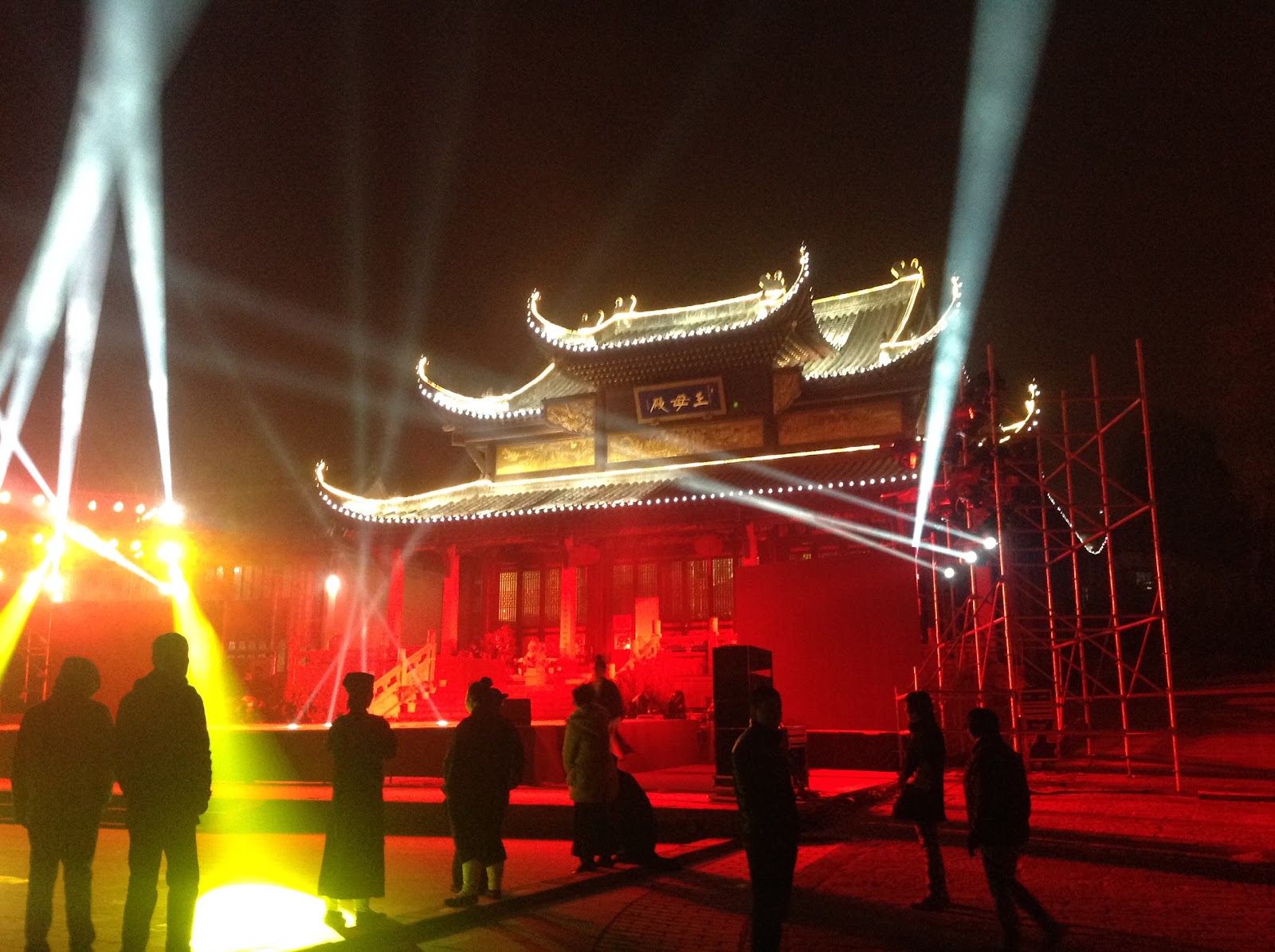
2014-12-27: Wuhan Changchun guan Ceremony for the intronization of the new prior and the opening of the Hall worshiping the Goddess Doumu 

元辰殿开光法会暨监院升座庆典将在27日盛大开坛

Presentation:元辰殿开光法会暨监院升座庆典将在27日盛大开坛


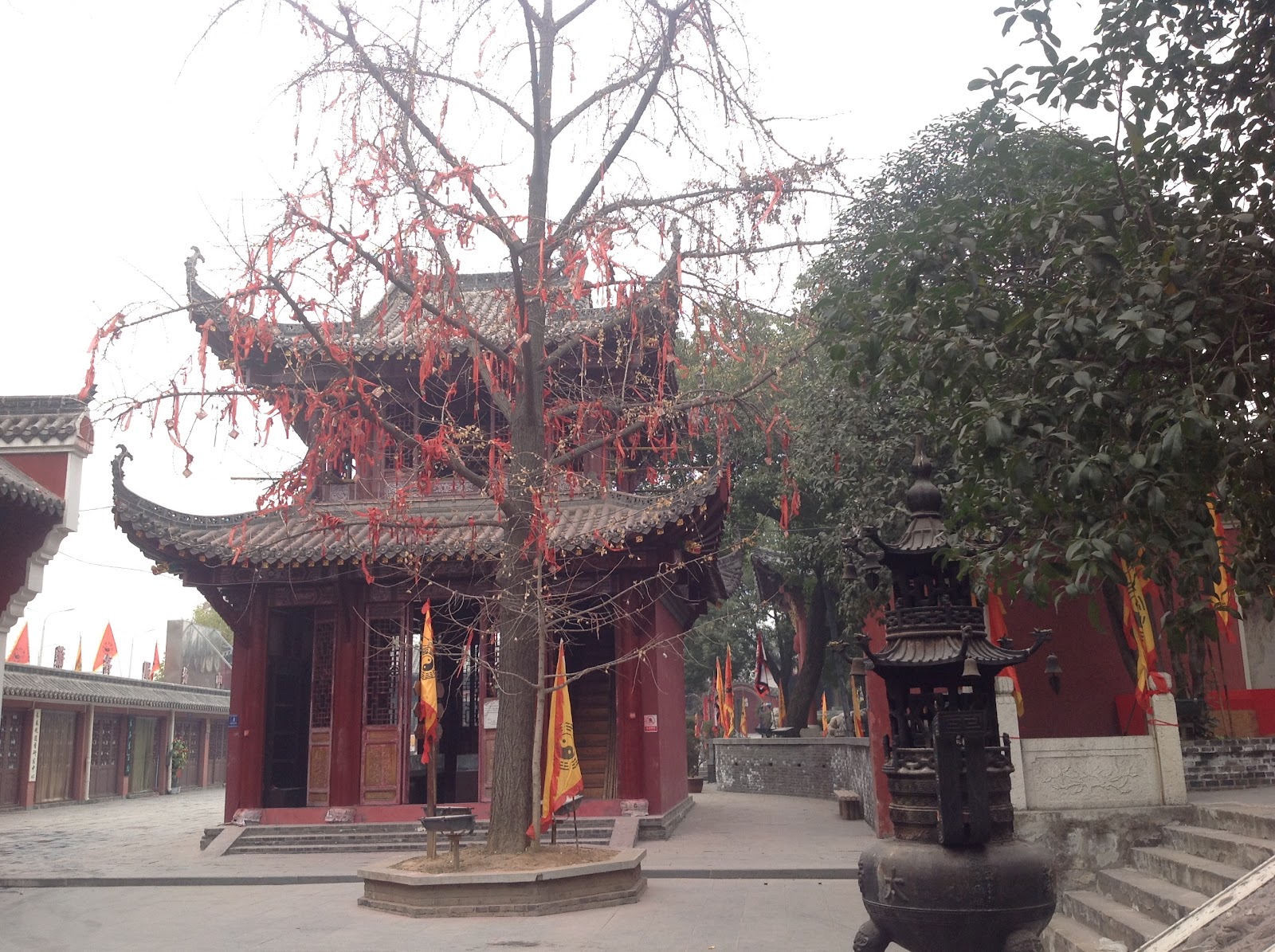
    武汉长春观始建于秦末汉初,历史悠久。道教文化厚重,是国家改革开放后的首批全国重点宫观,为中国道教四大十方丛林之一。是武汉地区硕果仅存的,保存最完好的道教场所。
    历年来长春观在方丈吴诚真大师的带领下,传统建筑正一步步地完善和恢复,从2000年开始对长春观进行修缮和重建工作,陆续重建了灵官殿、财神殿、王母殿、钟鼓二楼、斋堂、元辰殿、戏台等。至今已经初具规模,逐渐恢复了往日辉煌。
    为了完善丛林制度,更好的管理全真龙门丛林长春观,恢复全真十方丛林的传统职称,经长春观民主管委会推荐,全体道众投票选举迟信觉道长将荣升长春观监院。我们将在本月27日周六(农历冬月初六)上午八点半举行元辰殿开光暨监院升座法会,同时还将建醮九天皇经道场、举办慈善活动等。届时欢迎社会各界人士参加。
    迟信觉简介:
    迟信觉,俗名迟卫。生于197612月,中国人民大学哲学院硕士研究生,湖北省道教协会副会长。迟信觉1997年入道于山东青岛崂山太清宫,200210月 在湖北武汉长春观学习道教文化。2003年担任长春观经乐团高功,2005年主持筹备成立武汉道文化培训中心,任培训中心副主任。2007年当选武汉市道教协会副秘书长;2008年当选为湖北省道教协会常务理事;2011年担任政协武昌区委员。2012年当选为湖北省道教协会副会长。
    咨询电话:02788842090 88870713
                         长春观民管会宣


       Dec 24th:长春观监院升座祈福法会今日开坛


20141224日长春观监院升座祈福法会开坛祈福,由郑崇滨道长担任高功与长春观经师一起完成了开坛、请水、荡秽、扬幡等等一系列道教法事科仪。
道教建醮在三日以上者,必须建坛,以行科仪。建坛毕,须行开坛科仪。开坛要宣读《开坛符命》,用符命敕令八卦、天地、日月、天罡等神下临坛所,驱赶精邪,护持坛场。
据悉,自20141224日起至201511日,长春观将建醮九天的皇经道场祈福法会、举办慈善活动。这次祈福法会是与1227日的监院升座暨元辰殿开光法会相结合的,届时欢迎社会各界人士参加。
据了解,为了完善丛林制度,更好的管理全真龙门丛林长春观,恢复全真十方丛林的传统职称,经长春观民主管委会推荐,全体道众投票选举迟信觉道长将荣升长春观监院。

迟信觉,俗名迟卫。生于197612月,中国人民大学哲学院硕士研究生,湖北省道教协会副会长。迟信觉1997年入道于山东青岛崂山太清宫,200210 在湖北武汉长春观学习道教文化。2003年担任长春观经乐团高功,2005年主持筹备成立武汉道文化培训中心,任培训中心副主任。2007年当选武汉市道教协会副秘书长;2008年当选为湖北省道教协会常务理事;2011年担任政协武昌区委员。2012年当选为湖北省道教协会副会长。


Dec. 27th : 长春观监院升座庆典隆重举行


     长春观元辰殿开光暨监院升座今天在武汉长春观隆重举行,迟信觉道长荣任长春观监院。长春观是武汉市区内惟一的道教场所,也是我国道教著名十方丛林之一,称“江南一大福地”。近几年来,在市政府、区政府的关心和支持下,观内基础设施已日臻完善,东边的竹林,西边的皇城水都也全部收回,长春观已迈上了一个新的台阶。为响应“十八大”精神,长春观下一步工作重心将转向道风建设和文化建设,恢复道教丛林的传统制度,以便更有效的对丛林进行管理,为此,长春观选举了新一届监院,并举行升座仪式。同时,元辰殿在众多信众的支持下已全部完工,应信众们要求于吉日举行盛大神像开光法会。这次活动的举办,也是为弘扬传统道家文化,提升武汉文化内涵,使之成为全国乃至全世界的道教文化圣地和旅游胜地。
 宗教与慈善总是密不可分的,为纪念长春观监院升座,特联合谈笑基金会在长春观成立了“武汉长春观星星家园”,旨在帮助武汉市的自闭症儿童进行康复辅导训练,提供自闭症儿童和家属间的交流平台。


 Dec 27th 长春观举行监院升座暨元辰殿开光法会


 20141227日上午,农历冬月初六,道教十方丛林之一的武汉长春观举行监院升座暨元辰殿开光法会。在经过一整套道教升座仪式之后迟信觉道长荣升长春观监院。全国各地道友、十方善信云集,共同庆贺这一盛事。
    升座法会之后,举行了升座庆典活动。首先由湖北省道教协会秘书长万建芳宣读了湖北省道教协会对于迟信觉道长监院升座的任命书。中国道教协会副会长张金涛道长、北京白云观监院李信军道长、武汉市民宗委副主任夏铭、长春观方丈吴诚真道长、长春观监院迟信觉道长分别致辞。同时,为了帮助武汉市的自闭症儿童进行康复辅导训练,长春观与谈笑基金会成立了“武汉长春观星星家园”。
    近几年来,在武汉市政府、武昌区政府的关心和支持下,长春观内基础设施已日臻完善,东边的竹林,西边的皇城水都已全部收回,长春观已迈上了一个新的台阶。为响应“十八大“精神,长春观下一步工作重心将向道风建设和文化建设,恢复道教丛林的传统制度,以便更有效地对丛林进行管理,为此,长春观选举了新一届监院,并举行了升座法会。
   《道教诫律学》中在《律坛执事行为榜》中这样说“监院”这一职务: 监院,乃常住之首,领道众之宗主。凡经丛林执事选举产生之监院,均需举行升座仪轨,未举行升座之监院不具宗教神职。十方丛林的住持称“监院”,必须由丛林全体道众民主选举。闵智亭道长《道教仪范•十方常住执事体制及管理办法》中言:常住有一套系统的管理体制和管理方法,这种体制和方法是建立在民主和大公无私基础之上的,十方丛林所以几百年沿袭不败,根源就在这里。
    道教十方丛林属于所有道教徒公有,其不分全真、正一,凡满发大领的正规道教徒均有挂单、居住的权利。同时人人都有保护维持的义务。所以,道教十方丛林具有鲜明的民主性。
    同时元辰殿在众多信众的支持下全部完工,应信众们要求,值此监院升座之良辰吉日举行盛大的开光法会。这次活动的举办,也是为了弘扬传统道教文化,提升武汉文化内涵,使之成为全国乃至全世界的道教文化圣地和旅游胜地。
    吴诚真方丈在致辞时说,迟信觉道长监院升座是经过民主推选,不记名投票产生,是长春观历史上的一件大事。同时表示年轻的道长,要给他一个平台,给他一个锻炼的机会,让他带领大家修行弘道。我们要有新观念、新思想,把道教的文化通过很多平台展示,更好的宣传出去。
    迟信觉道长生于1976年,中国人民大学哲学院硕士研究生。2002年在武汉长春观学习道教文化,2012年当选为湖北省道教协会副会长。迟道长曾说过,现在道教的仪轨规矩都没有恢复,以后的道路上,首先要完善十方丛林的规制以及修真、修道的步骤,以戒为师、以律为师。带领十方信众和身边的道友一起学道、修道、弘道。并表示下一步将修建道教图书馆、博物馆和长春观音乐厅,更好的宣传道教文化。






2009-11-15

Ritual for the Intronisation of the First female Abbot of Taoism, in Wuhan Changchun Temple 中国道教史上首位女方丈武汉升座仪式

2009-Nov-15- a Female Taoist abbess was intronized for the first time in the history of taoism; Wu Chengzhen, the abbess of Changchun temple in Wuhan (Hubei province) was officially recognized a person of great merit and deep taoist knowledge during the ritual held on the 15th November 2009. She is now the only Taoist bearing this title and was selected by the whole taoist community. Pilgrims from all over the world (Singapour, malaysia, Egipt, Taiwan, France, Spain…) and representatives of many Taoist associations came to honor her.
I went there to pay my respects and brought along the french TV crew from ARTE.
实拍中国道教史上首位女方丈武汉升座仪式
Presentation of Changchun temple on daoinfo.org
  • Photos of the Big Day:


------------------------------------------------------------------------------------------
Obviously..I was talked into giving a speech by my daoist friends from Wuhan...


 2009年11月15日,武汉长春观,吴诚真方丈升座仪式上,法国道协会长景秀代表法国道协致辞。
法国道教协会会长凡琳·玛蒂

        2009年11月15日,吴诚真方丈升座仪式上,法国道协会长景秀(凡琳·玛蒂)代表法国道协致辞后,主持人和她开起了玩笑:“是修道让您如此年轻吗?”她回答说:“是的。”
        据了解,景秀出生于法国巴黎,家在法国巴黎南部一个小镇上,今年37岁。她是巴黎大学的西医学博士,曾在英国工作了5年,研究脑部对药物的反应。1998年,她的一位英国同事接触道教文化中的打坐,自此迷上了东方古国博大精深的道教文化。次年,景秀结识了到英国传播道教文化的陕西青华宫黄世真道长,黄道长收下了这个法兰西女弟子,并赠道号“景秀”,后者成为全真道教龙门派第32代弟子。


-------------------------------------------------------------------------
  • Interview of the Abbess:

The event made the headline in chinese newspapers and on TV.:
Here is an excerpt of her interview with China Daily:
China's First Femaile Principal Taoism Abbess
The vigor of Wu Chengzhen's faith has made her an exception to nearly two millennia of Taoist clerical orthodoxy.
On Nov 15, her intense piety earned her an appointment as principal abbess (Fang Zhang) of Wuhan's Changchun Temple, making Wu, 52, the first woman to hold such an eminent position in China's only native archaic religion.
"I think the ordination of a woman to such a high rank is a sign of the times," she says.
"It won't change anything about my daily life, but inside, I feel happy and grateful and a little ashamed, because I should do more."

Wu Chengzhen is the first principal abbess (Fang Zhang) of a Taoist temple in the religion's history.
The abbess wraps her crossed legs in a peach-colored blanket as she sits on the bed of her dorm room in Renmin University of China in Beijing, where she's now studying. A brown sweater peaks out from beneath her dark blue robe and her bun pokes out of the center of a cylindrical Taoist cap.
Periodically, her eyelids droop and she retreats into da zuo (Taoist mediation) mid-conversation. Moments later, she snaps back from her trances, speaking lucidly and seeming to have heard everything said while in her daze.
Wu relates her new station to the ancient myth of the Eight Immortals, a tale revered by Taoists. One of the deities, He Xiangu (Lotus Immortal), was a woman.
"Taoism strengthens equality among all people," Wu says. "It's also more egalitarian toward women than other major religions."
Wu comes from a devout family and is the youngest of six children, named Wu Yuanzhen before she was given her religious name. During her middle school years, she immersed herself in the home libraries of her Christian, Buddhist and Taoist relatives.
Her father was profoundly influenced by Confucian ethics, especially familial piety. When his mother fell ill at age 56, he hacked a chunk out of his humorous (the upper arm bone) with a knife for her to eat. He hoped such a grand gesture would move the gods to heal the woman.

Wu, 52, was crowned Principal Abbess of Wuhan's Changchun Temple at a grand ceremony on Nov 15.
Wu says it worked. Her grandmother immediately recovered and lived to the age of 87. The event is recorded in the Wu Family Genealogy kept by the government of Xinzhou, a county in Wuhan.
Wu followed an elder sister's example to commit herself to Taoism at age 23.
In an interview with the Wuhan-based Changjiang Times, Wu said she began her life at the Changchun Guan (guan refers to a Taoist temple), cooking, washing and planting vegetables.
She recalls that her master once told her to check if the water in a kettle had boiled. When she lifted the lid to look inside, the steam almost burned her face.
"My masters often scolded me: If I couldn't do anything, why did I leave the secular life?"
But she proved to be a persistent disciple - the only one of eight who remained after a year of training.
"Taoism focuses on optimism, cherishes life and deals directly with reality," she says.
But Wu accepts the supernatural in her conception of the corporeal. She claims to have seen dragons in Jilin province's Longtan Temple. She says the creatures swam in circles in the river while she and 25 believers stood on the banks communicating with the gods in June 2001.

The youngest of six children, Wu, followed an older sister's example to commit herself to Taoism at 23.
"It wasn't one dragon, one time or one day. It was three dragons, three times and three days it's true; you can ask the local people."
She describes the legendary rulers of water as being several dozen meters long with white bellies. Upon their arrival, the waters stilled and the skies became sunny, she says.
"There are many things we don't know much about, but we can't say they don't exist," she says.
Wu claims to have also seen Taoist gods flying toward her clad in radiant attire. "I always feel L Dongbin (one of the Eight Immortals) by my side," she says.
"If the pantheon chooses me, I will persevere in cultivating myself to also become an immortal."
Wu says she saw the deities during da zuo, which she does for several hours a day.
Between prayers and meditation, she attends to her daily work for the temple. This includes cultural tasks, such as preaching and advocating Taoism - she has some 10,000 disciples from all walks of life - and "hard construction" tasks, such as building Taoist teahouses and restaurants in the temple, and planning a hospital and a museum in the coming decade.
"I want to create a place where people can feel Taoist culture in everything - the food, the buildings, the music, the medicine, the teahouses and the tai chi," she says.
"There's so much to do; it will require tens of millions of yuan."
Changchun Temple has in recent years donated more than 4 million yuan to help victims of disasters, such as the Sichuan earthquake, the blizzards in South China, Typhoon Morakot in Taiwan and the Indonesian tsunami. It has also contributed to building charitable Hope Schools for poor children in rural areas.
Wu disagrees with commercializing spirituality, as Shi Yongxin has done for the Shaolin Temple. She says she doesn't know much about the entrepreneurial monk, except that he cruises around in luxury cars when visiting Beijing.
The temple provides Wu, who has lived there in a 10-sq-m room for three decades, a 370-yuan monthly allowance.
She lifts her robe to reveal holes in her sweater and then slips off her 25-yuan shoes, exposing toes that stab through tears in her socks.
"It's funny, isn't it?" she says, giggling.
"What's on the outside doesn't matter. My happiness comes from my soul," she explains, pointing to her heart and then to her temple.
Her greatest source of joy is personal development, she says.
Wu is finishing her dissertation through a four-month seminar at Renmin University organized for 52 religious figures.
Because Wu, who is 52, doesn't know how to use a computer, she handwrote 24 pages of the paper and had her apprentice type it for her. The study examines Taoism's function in creating a harmonious society.
"There shouldn't be any nuclear weapons, war or pollution, because these aren't propitious to the world," she says, tapping the paper and chuckling.
"People should be more like water, because water can absorb and hold a lot of things."
In 2001, Wu earned her first graduate degree at Huazhong University of Science and Technology in Wuhan.
Her degrees are honorary, because she only finished high school before the "cultural revolution" (1966-76). After a brief stint as an accountant after graduation, she began self-study at the temple but received no other formal higher education.
She became a Zhu Chi (lower-ranking abbess) of the temple in 1995. This May, when the temple decided to choose a principal abbess, the leaders of all departments of the temple unanimously chose Wu.
All Chinese Taoist temples have Zhu Chi, but only the prominent ones have Fang Zhang.
Leaders from the State Administration for Religious Affairs and the Chinese Taoist Association attended the grand ceremony at which Wu became the principal abbess.
Wu believes her new appointment will bring new tribulations.
She likens it to the heroes of the story Journey to the West, in which the pilgrims who received a divine calling to retrieve Buddhist scriptures from faraway lands faced a myriad of harrowing obstacles.
"If the gods chose me to do this, they'll place greater difficulties in my path," she says.
"But facing these will assist my self-refinement and make me a better Taoist."
(Source: China Daily December 4)
--------------------------------------------------------------------
  • Links:
- Intronization of the abbess: http://fr.showchina.org/21/04/200911/t468329.htm (Fr,)
-Changchun Guan history : http://en.daoinfo.org/wiki/Eternal_Spring_Temple_(Changchunguan)_,_Wuhan (Engl.)
-Wuhan : http://fr.wikipedia.org/wiki/Wuhan (Fr.)  ;  http://zh.wikipedia.org/wiki/%E6%AD%A6%E6%B1%89%E5%B8%82  (ch.)   ; 
-My photos on PW and DW
-Web-videos
-Chinese newspapers (ch.)
*******************************************************

2007-06-14

Wudang Shan Mountains (2007-06-14)

In June 2007, for my second visit to Wudang Shan Mountains 武當山 with my taoist friend Gongbing, I managed to stay a few days in the priests quarters of Zixiao Gong temple with the nuns and then in JinDian at the top.

Mount Wudang is a famous Taoist mountain well know for its martial-art but also a pilgrimage center since  the Song and Yuan Dynasties. The imperial families believed in the spirit of The Perfect Warrior ( 真武 Zhenwu ) of the north. As a result, Wudang Daoism, whose major belief is that of the Perfect Warrior, became a prosperous taoist center.

Famous taoist who lived on the mountain include:

-Chen Tuan, who was once a hermit at Jiushi Cliff, Mt. Wudang, where he Abstained from Grains ( 辟谷 Pigu ) and Refined The Vital Breath ( 煉氣 Lianqi ) for more than 20 years.

- Zhang Sanfeng, lived on the mountain in seclusion (Ming Dynasty).


Liens:

http://en.wikipedia.org/wiki/Wudang_Mountainshttp://en.daoinfo.org/wiki/Mt._Wudanghttp://en.daoinfo.org/wiki/Mt._Wudang#The_Jindian_Temple  ;        http://fr.wikipedia.org/wiki/Wudang_shan   ;  http://fr.wikipedia.org/wiki/Wudang                                                                                        My Photos on DW and PW

---------------------------------------------------------------